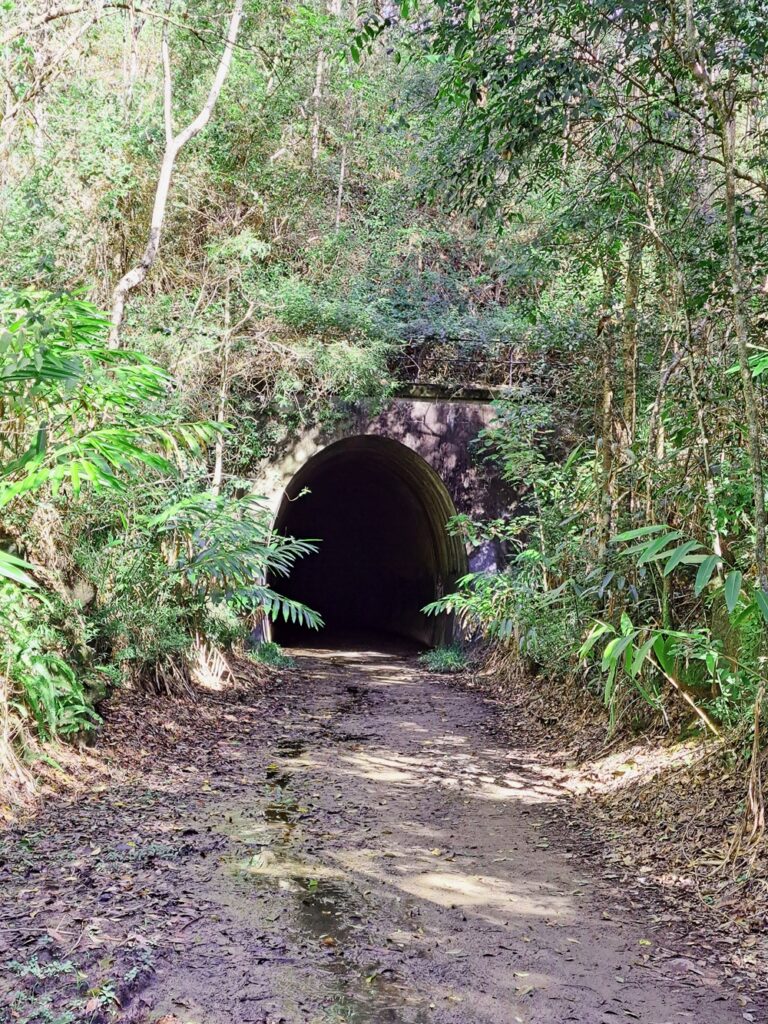
On a spectacular Sunshine Coast morning, we were off to Landsborough to hike the heritage-listed Dularcha Tunnel. Dating back to 1891, the tunnel is one of only two along the old narrow-gauge North Coast rail line connecting Brisbane to Gympie.
Having done little research (read none, as my partner decided our route this day), I had visions of a black, creepy hollow, filled with the stench of bat guano and the high-pitched screech of micro-mammals. Local legend has it that the original tunnel collapsed, killing workers, and that it’s haunted – my favourite kind of tunnel (holds torch to chin and makes woo-woo noises.)
The Tunnel Track trail runs adjacent to active train lines, and I did wonder how safe it would be going into a train tunnel with active trains passing through (here’s where prior research might have proved useful.) The trail starts at either the Landsborough or Mooloolah end (a shorter return walk) and is approximately 7km out and back. We decided to do it as part of the Roses Circuit, which is an 8.8km loop, Grade 4 hike.
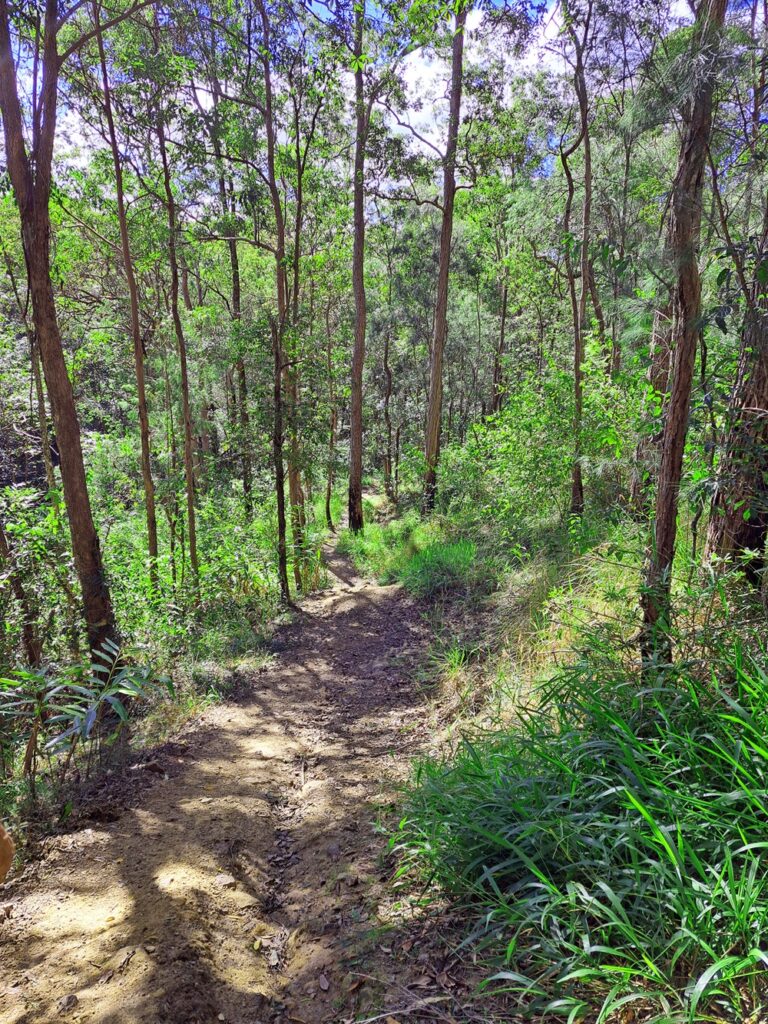
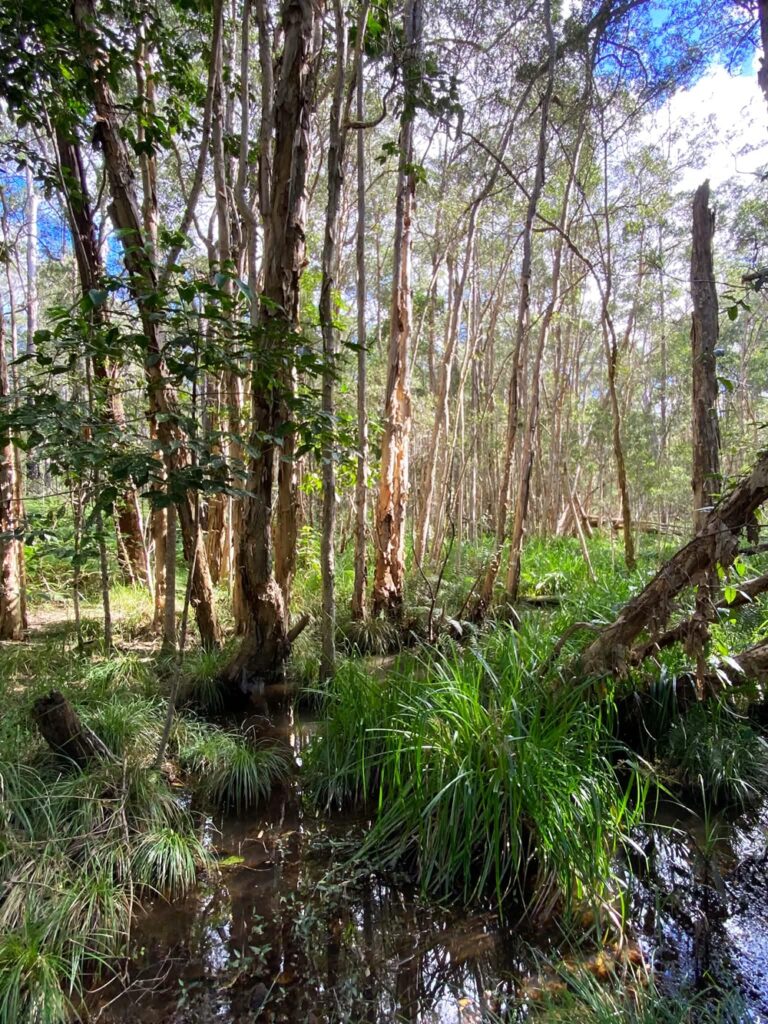
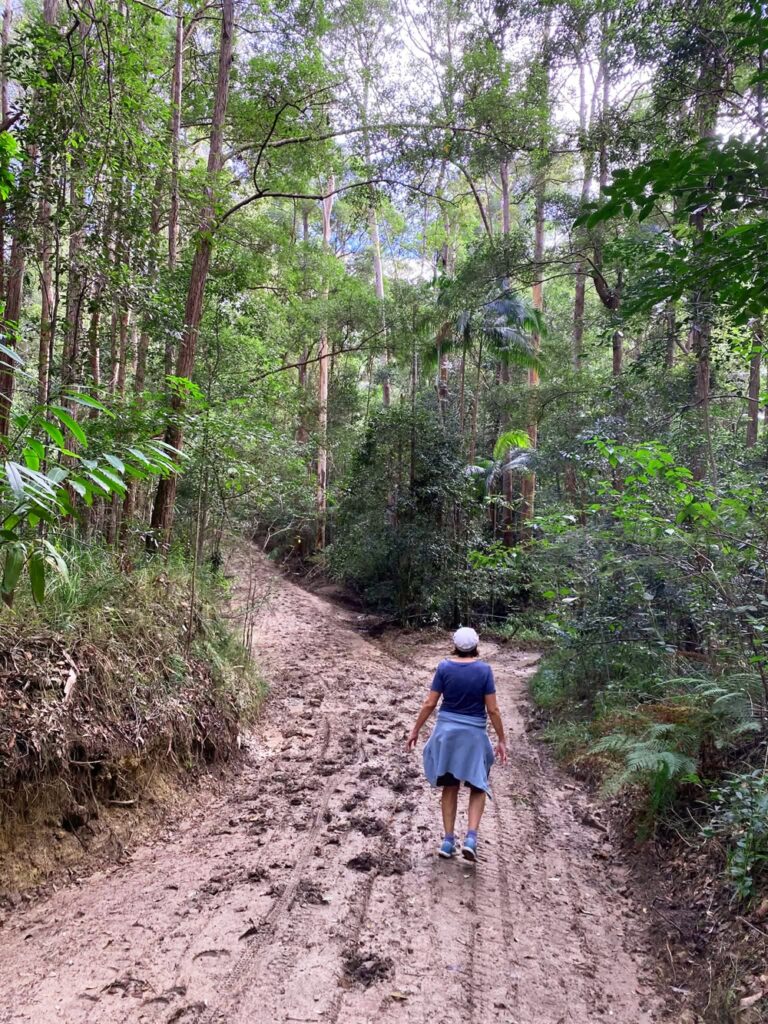
Roses Circuit took us through dry sclerophyll woodland and lush rainforest gullies, with an abundance of eucalypts, blackbutts, flooded gums, cabbage tree and piccabeen palms, and dense tropical undergrowth. It was an eclectic mix of ecosystems, punctuated with the pretty calls of a variety of bush birds.
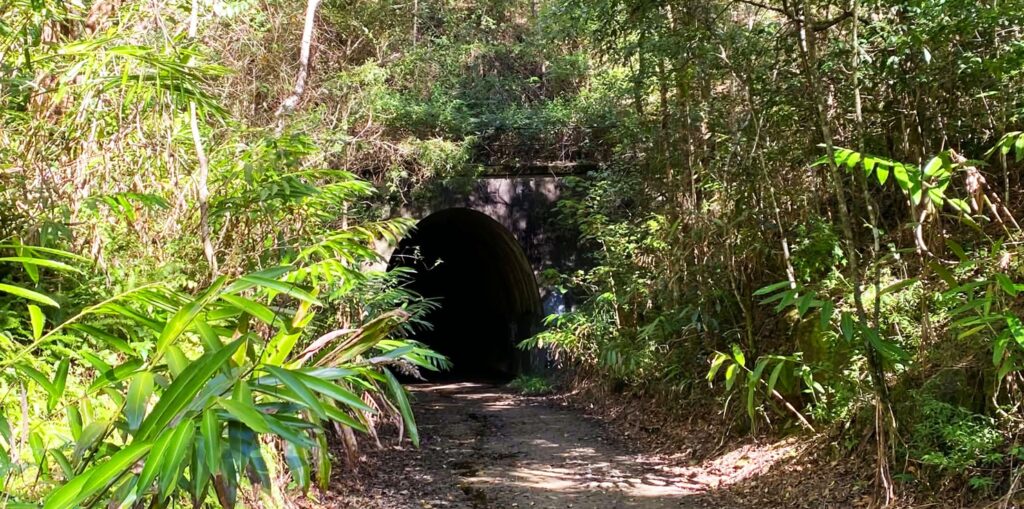
Signage on the circuit was a little bit dodge, and my post-hike research (yup, better late than never, eh) suggested the track is poorly marked and confusing. Duh! For example, in what world does “Tunnel Bypass” mean you need to go this way to see the tunnel? This implies the trail bypasses the tunnel. Not gonna argue.
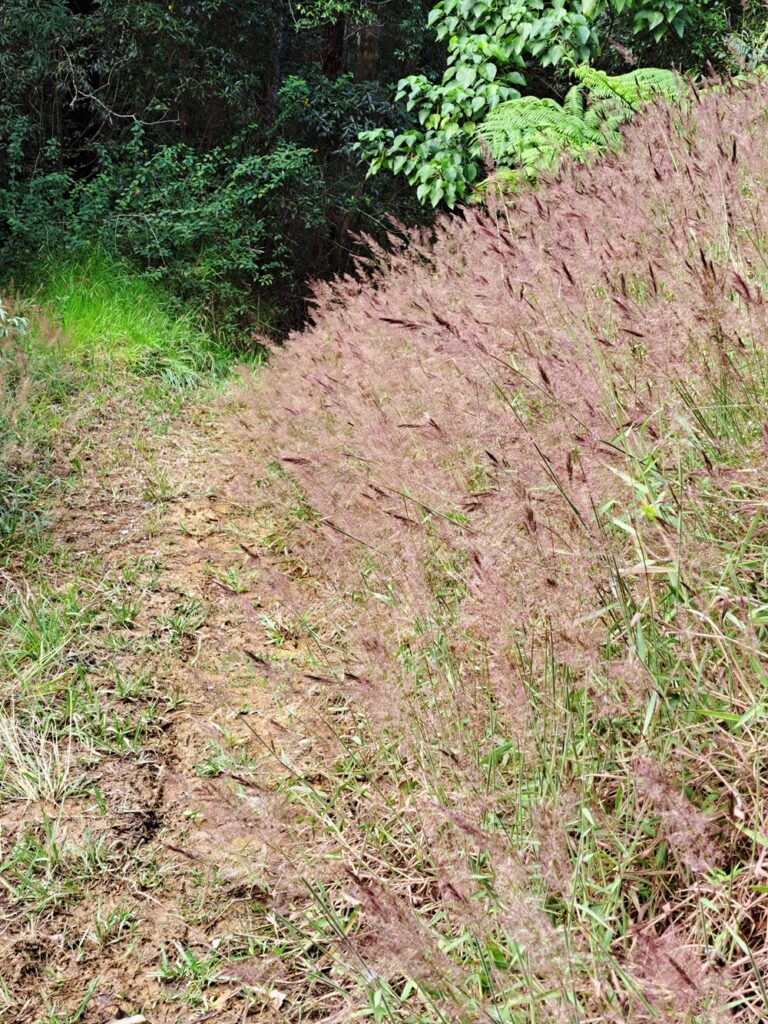
High on the Roses Circuit trail, we hit a point that was electricity tower adjacent, the track completely overgrown in thigh-high grass. Being the snake-phobe that I am, I ordered an about-turn, and we retreated to the Gully Track which cuts across the national park and reconnects to the circuit. It was a good call with that big ridge coming at me!
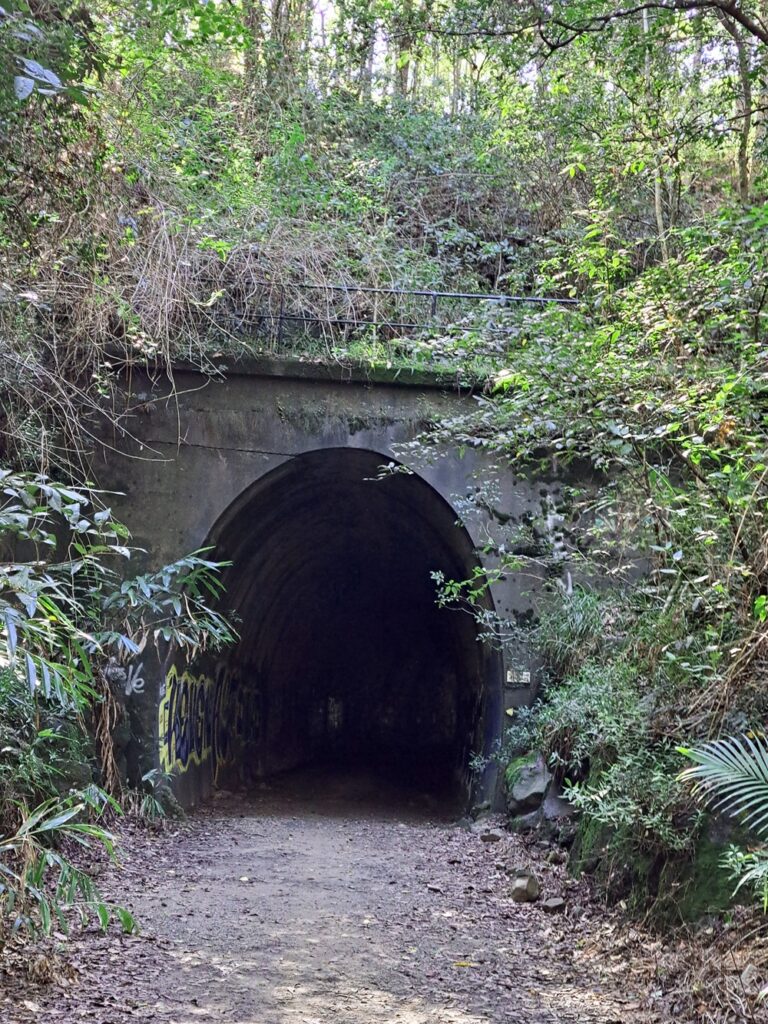
While we may have lost valuable steps turning back, we gained them by walking straight out of the national park and onto Roses Road, missing any signage indicating the rail tunnel and disregarding those that said tunnel bypass. Fortunately, a kind local gave us the heads-up, turned us around and back into the park with directions on how to get to the tunnel (bless.)
The tunnel itself was a little underwhelming, its history perhaps more impressive than it. In 1889, T Jesser & Co won the contract to build a rail line from Landsborough to Yandina. Camps were set up, and two thousand men were employed in different gangs to clear the scrub, with three hundred horses utilized to cart the heavy loads, and the most intensive tunnelling work done by hand with pick and shovel.
The railway link took over two years to build and the 93.5m-long tunnel was hand-excavated through a solid sandstone ridge. The tunnel is lined completely with concrete, the front opening portals at the north and south ends, also concrete and semi-elliptical in design.
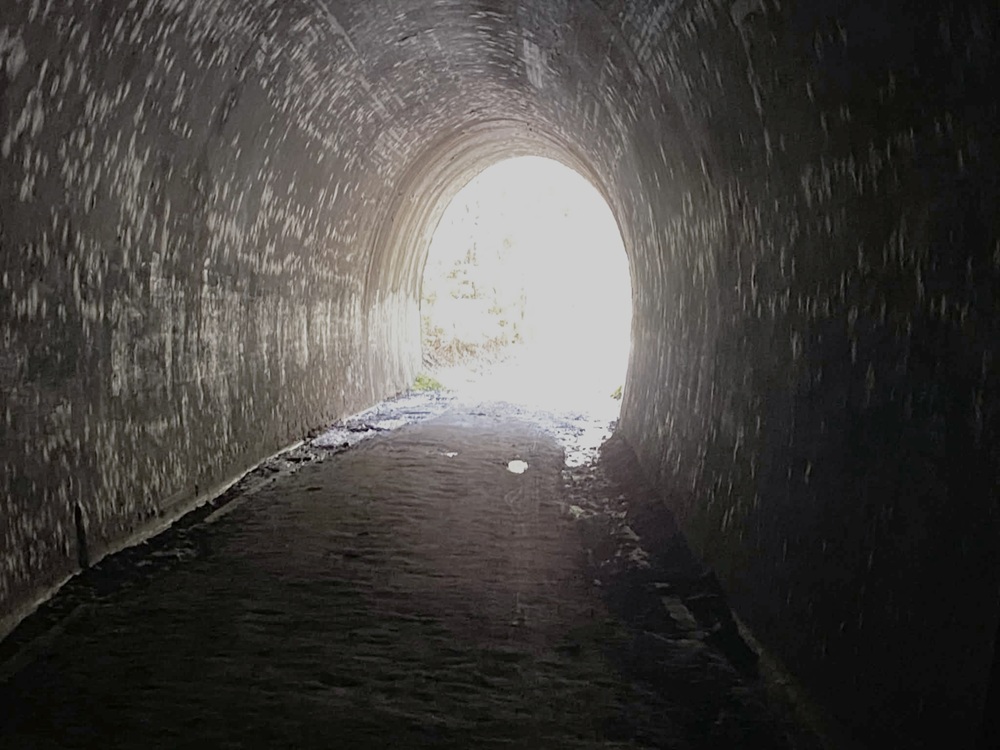
I was hoping for pitch black, in-your-face, can’t-see-your-hand-darkness, but the tunnel has a gentle curve and is short enough so that when you enter at one end, you can still see daylight at the other. The resident bat population wasn’t in attendance on the day we were there, and when I asked Siri where they were, she pretended she didn’t understand the question.
The upside to bat-free meant the tunnels’ strong and low reverberation pitch was insane for a bunch of bellowing coo-ees! C’mon. You know you want to.