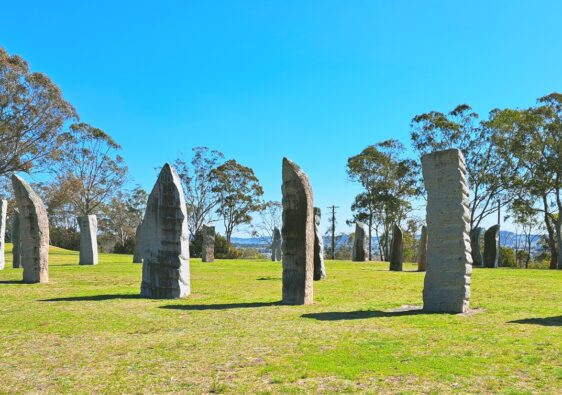
Perpetually fascinated by the first lunar landing (Flat-Earthers and other believers of the moon hoax conspiracy theory, pens down!) and a devotee of the Aussie movie banger “The Dish,” Parkes has forever been on my bucket list. Located in country NSW, enroute to Parkes, you pass signs with town names like Grong Grong and Wagga Wagga. Like, we get it the first time; no need to repeat yourself, peeps who name towns. And west of Parkes is the township of Bogan Gate. Is this where they all get in when someone leaves the gate open? Asking for a friend.
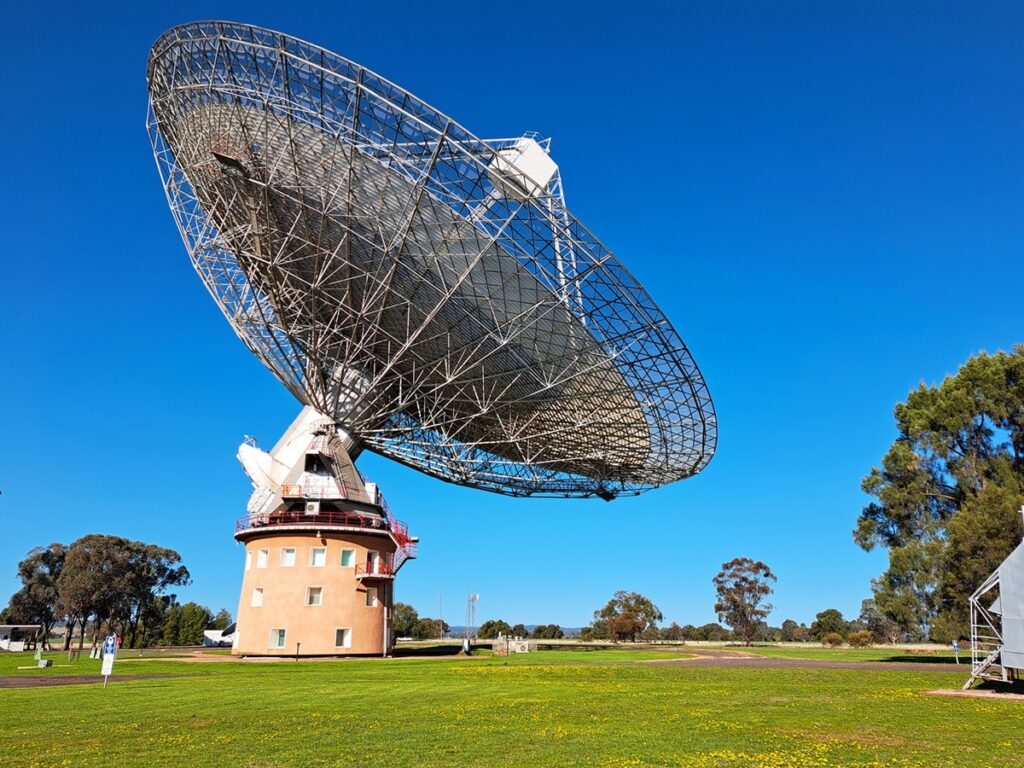
The iconic Aussie movie, The Dish, is the true story of a group of eccentric scientists responsible for manning a satellite dish to receive historic images of man’s first steps on the moon (spoiler alert, most of the town scenes were filmed in nearby Forbes). A magnificent feat of engineering, the Dish, one of the largest single-dish telescopes in the southern hemisphere, is 20 km’s north of Parkes and sits adjacent to a farm paddock with a bunch of caramel-coloured sheep with black heads, in the middle of the boonies.
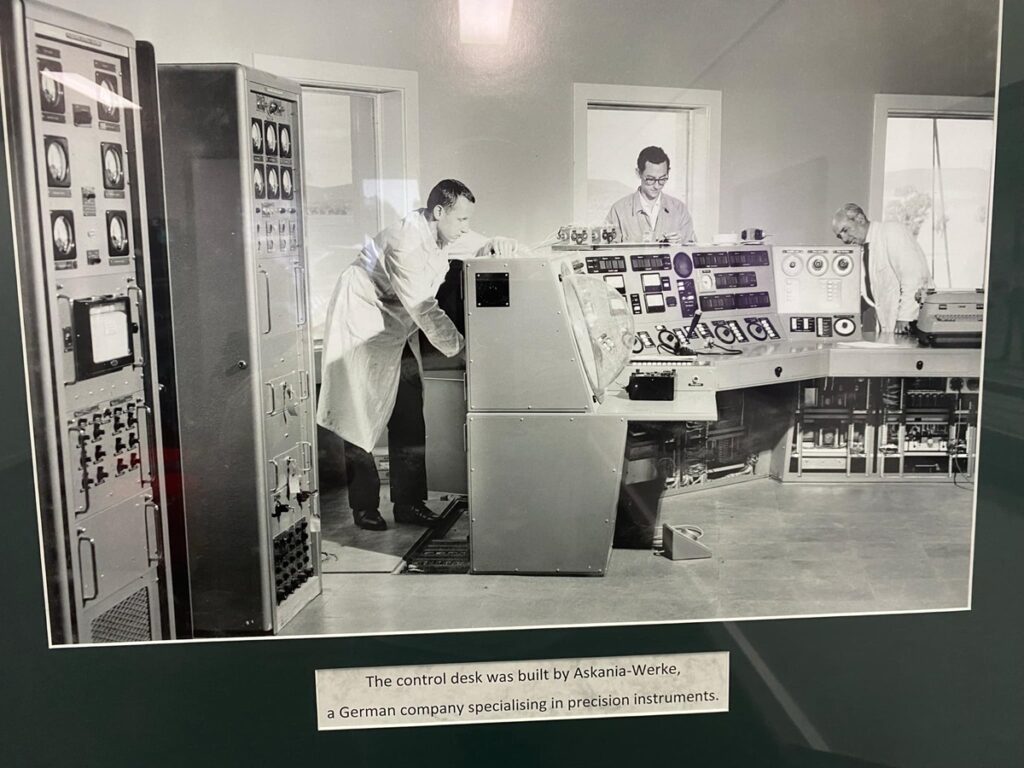
The Dish, a 64-metre-diameter, steel paraboloid, elegantly balanced atop a three-storey concrete tower, was built in Parkes, favoured for its amiable weather conditions and lack of local radio interference, over a period of 3 years, and officially opened in 1961. In 1969, mankind took “one giant leap,” and 650 million people watched as Neil Armstrong walked on the moon, and the Parkes telescope famously supported receiving and relaying the live TV broadcast images of the Apollo 11 moon landing. The telescope tracked Apollo 11 throughout its journey, gathering voice signals from the astronauts, telemetry from the spaceship, and television signals from the moonwalk itself (I just can’t. Still in awe, like 1969 brain trust…you rock!)
The CSIRO Parkes Observatory Visitors Centre is a mind blowing snapshot of how the dish is used as a ground station for planet probes, but its primary mission is to record natural radio signals from deep space objects, notably pulsars and spinning neutron stars (Rajesh Koothrappali, please explain!) There’s a lot of big brain astrophysics information that my small brain had difficulty absorbing.
Interestingly, outside the visitors information centre are two large (3.5 metres in diameter) whispering parabolic dishes, distanced almost 50 metres apart. Apparently, whispered communication provides a tangible demonstration of the basic concepts embodied in the parabolic shape of the Parkes dish. A complete cynic, I sent my partner to the other dish and then whispered a disparaging comment about him. His answer, ‘I agree’ was loud and clear, like he was standing right next to me. It made me lol, and I was still trying to locate some kind of transmitting device on my way out to explain the anomaly.
The Dish isn’t Parkes’ only claim to fame. In the 2nd week of January each year, Parkes holds the Elvis Festival, hundreds of events over five days, featuring world renowned Elvis tribute artists, lookalike competitions, car shows, rock’n’roll dancing, and a street parade. It attracts more than 25,000 visitors from around the world and is a literal sea of Lycra and Brylcream!
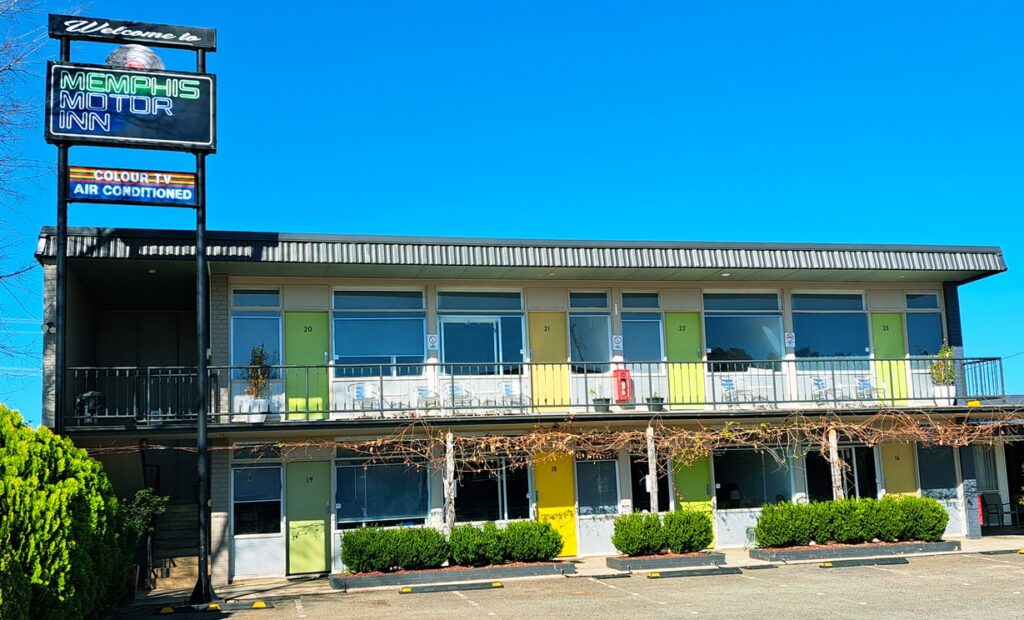
We stayed at the Memphis Motor Inn, and the sign out front has a vinyl record sticking out of it and proudly declares “Colour TV.” Pretty sure it’s a piss take, and if not, nicely played Memphis Motor Inn, nicely played.
Dang it all, I forgot to pack my white stretchy gabardine eyelet jumpsuit and matching cape!