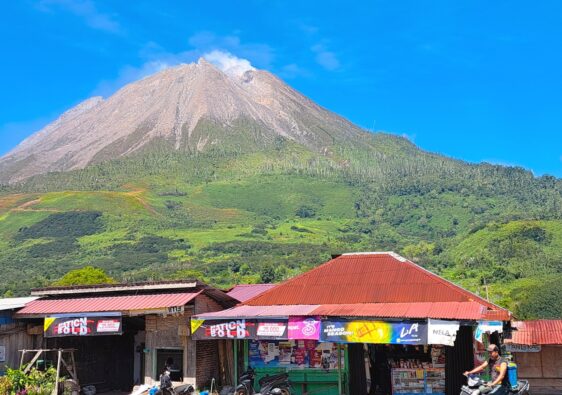
A UNESCO World Heritage Site, Gunung Leuser National Park is one of the few places in the world where you can observe critically endangered wild Sumatran orangutans in their natural habitat. Spanning 7,927 square kilometres and nestled within the Barisan Mountains, the park, named after the 3,119m Mount Leuser, protects a diverse array of ecosystems and is home to approximately 5,000 orangutans.
A popular gateway to the national park, Bukit Lawang was the site of an orangutan rehabilitation centre, established in the early ‘70s, with the objective being to release captive orangs back into the wild. A schedule of daily supplementary food Pavlov dogged these primates to rely on humans for sustenance, reducing their ability to exist independently in the wild. While the rehab centre was disbanded in 2002, the feeding platforms weren’t officially closed until 2015/2016. It’s been said that the orangutans in the forest near Bukit Lawang are former rehab residents, accustomed to humans, but it’s been a long time between bananas, and while many are semi-wild, there are also genuinely wild orangs here too.
We forayed into the jungle on a half-day trek. You can do full-day, overnight, or multiple-night treks as well, depending on your tolerance for leeches, long drops or the ick of digging a hole for your business. Before I even made it to the park entrance, I was absolutely saturated with sweat that only the intense humidity of a rainforest affords. At this time of the year (late May), tourism season proper hadn’t kicked in. That said, there were approximately 100 tourists in the park when we were there, with 300 being the norm in peak season. While there is no hard cap on tourist numbers, local operators endeavour to manage their visitor numbers to minimise environmental impact.
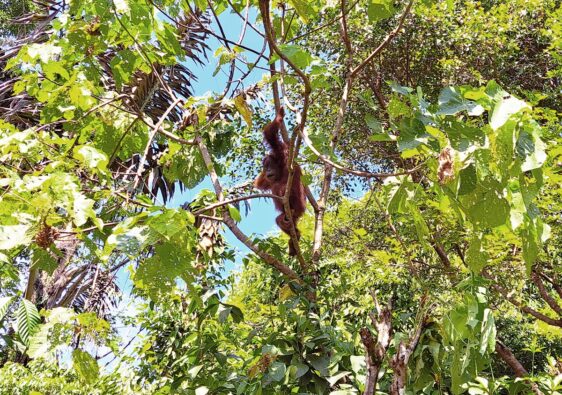
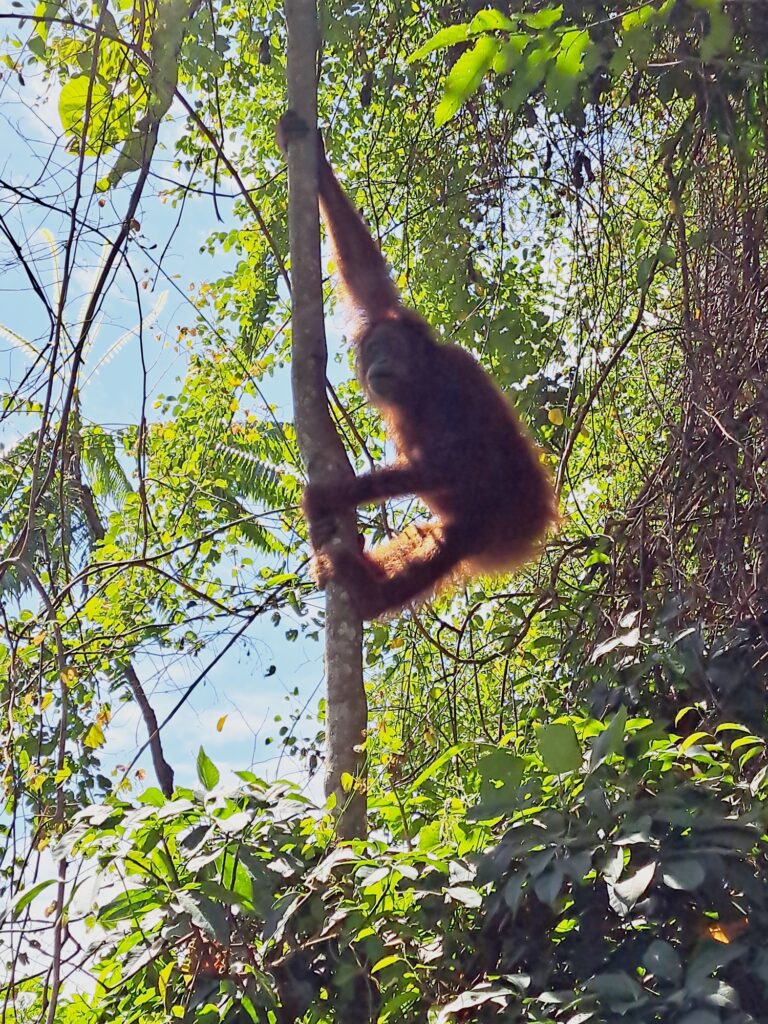
Not long into the trek and pre-park gateway, a young orangutan was spotted. She was a pretty teenager, swinging insouciantly through the canopy. She was clearly comfortable with the profusion of rubberneckers in her space, and as she dangled teasingly above our heads, Rama our guide, moved me out from underneath her, for obvious reasons. (I was fangirling and oblivious!) Halfway up a tree, she turned to us and put her hand to her mouth, the gesture and facial expression so humanlike, a flirtatious “look at me,” and it made me lol. With a high degree of genetic overlap between humans and orangutans (97% DNA similarity), it’s no surprise our evolutionary relatives have such human mannerisms.
The trails in Gunung Leuser are unmarked and intricate, with steep and slippery ups and downs, and you can’t enter the park without a guide. The jungle terrain is challenging to navigate, there’s the risk of encountering dangerous wildlife, and the guides provide valuable insights into the park’s ecosystem and help to ensure respectful interactions with the wildlife, particularly the orangs.
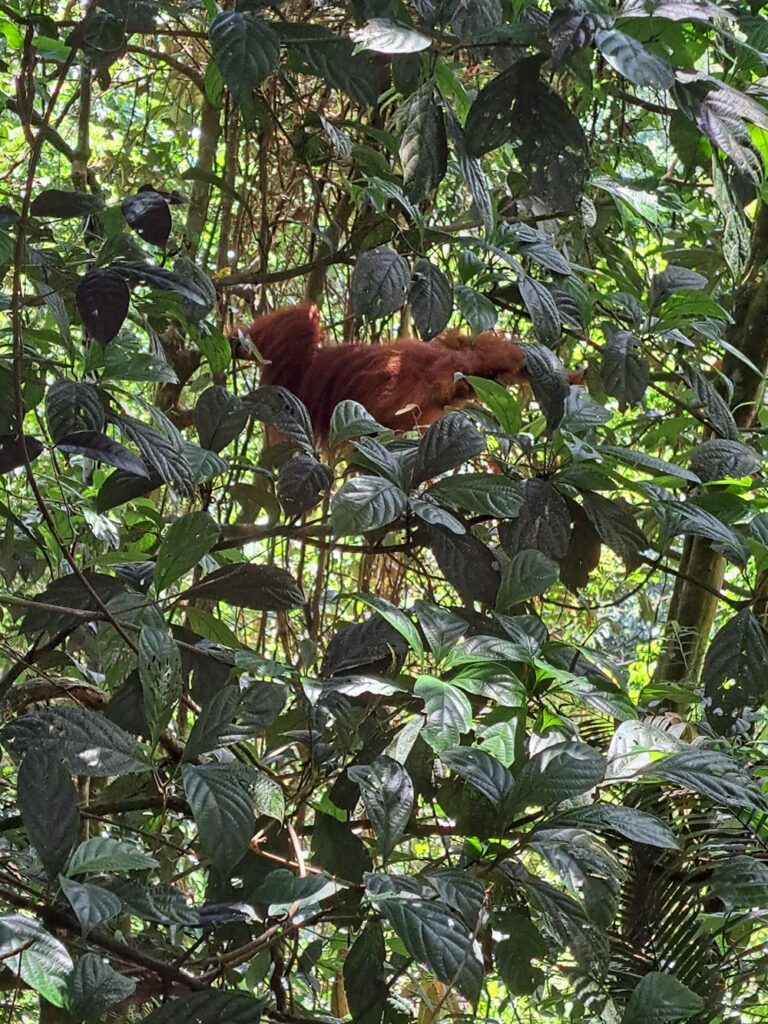
Once in the forest, the jungle drums beat and guides give each other heads-up on orangutan sightings. These comms gave us the opportunity to observe an amazing 80kg alpha male. We were on the ridge, he reclining languorously in the dense canopy, occasionally reaching a big, hairy, ginger arm out to grab a leafy snack, his face flanges visible from the distance. Dangling dexterously with one arm, huge yet elegant, it was a rare sighting and almost impossible to tear myself away.
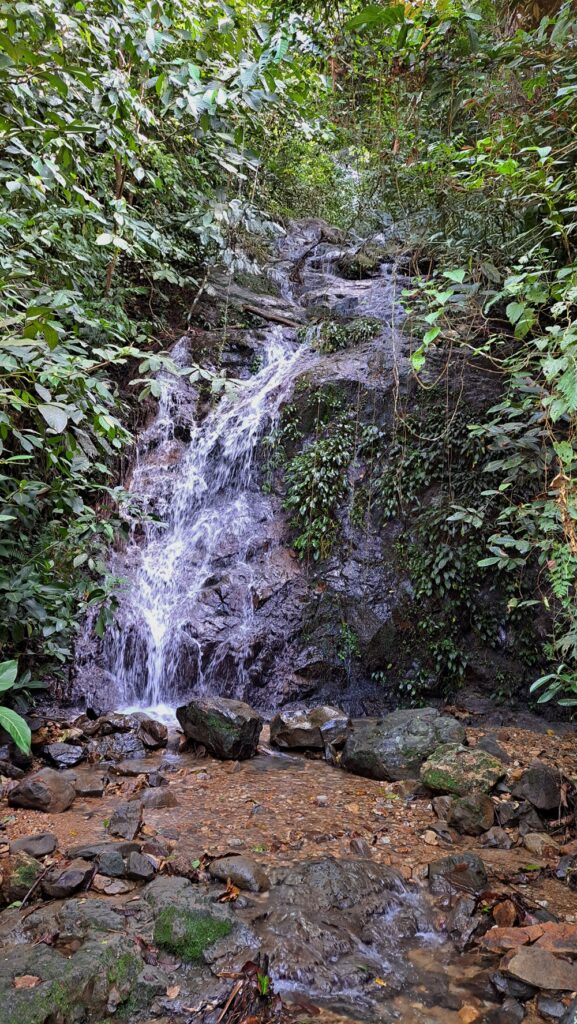
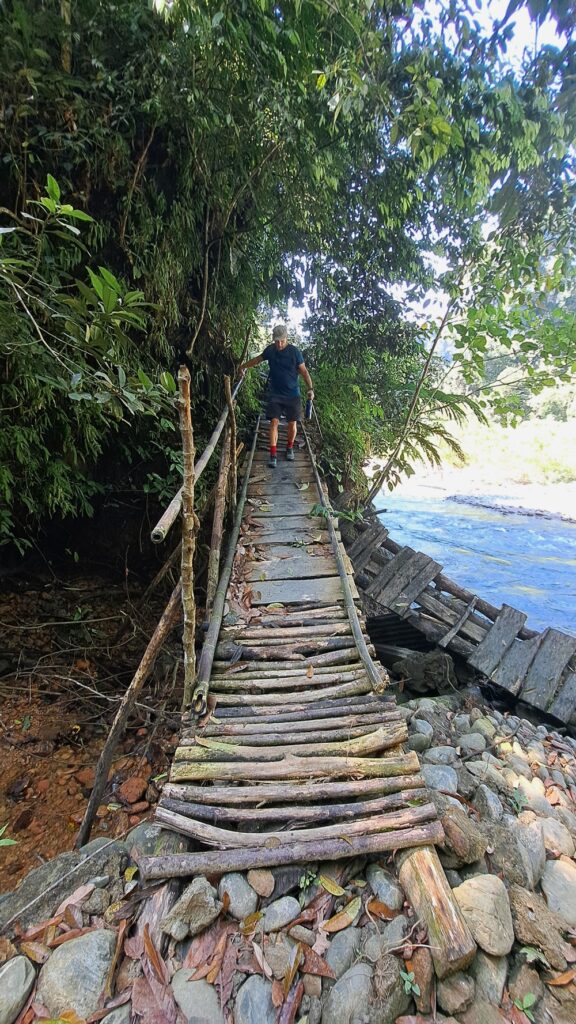
While orangs are the holy grail in Gunung Leuser National Park, there are other interesting wildlife to spot, like pigtailed and long-tailed macaques with mad mohawks and pretty-faced Thomas Leaf monkeys. For those who venture deep into the jungle, there’s the lure of Sumatran tigers, elephants, rhinos, sun bears, and clouded leopards, though these creatures are elusive, critically endangered, and sightings are exceptional.
A great deal of trekking time is spent looking down, negotiating trails that are essentially just mud and thick tree roots. I queried with Rama whether there were many accidents in the park, and he said heaps of broken legs, ankles, and hips, and that there is a team they can call who come into the jungle to carry people out. I asked if he could call them now to come get me, and he laughed.
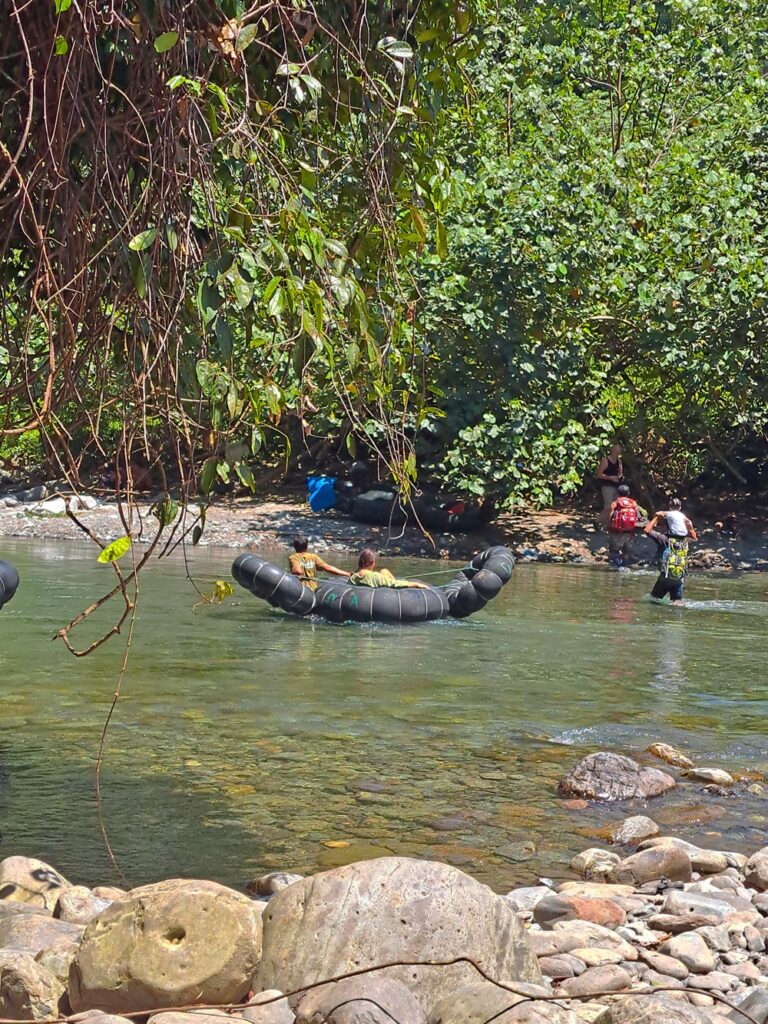
The trek ended at the river, and we floated indolently back to Sam’s Bungalows, negotiating gentle rapids on inflated rubber tubes, surrounded by ancient forests, every bend revealing nature’s beauty. It was so good, we booked a 1.5-hour hike upriver a couple of days later to ride the rapids for longer. We dressed the part: full bush commando, chunky hiking boots, thick socks, walking sticks, and Rama lobbed up in pluggers (flip-flops, thongs, jandals, whatever your vernacular is), a pair of boardies, and suns-out-guns-out singlet top! Such is village life.
Hand on heart, this is one of the best experiences I have ever had. You MUST bucket list this!